
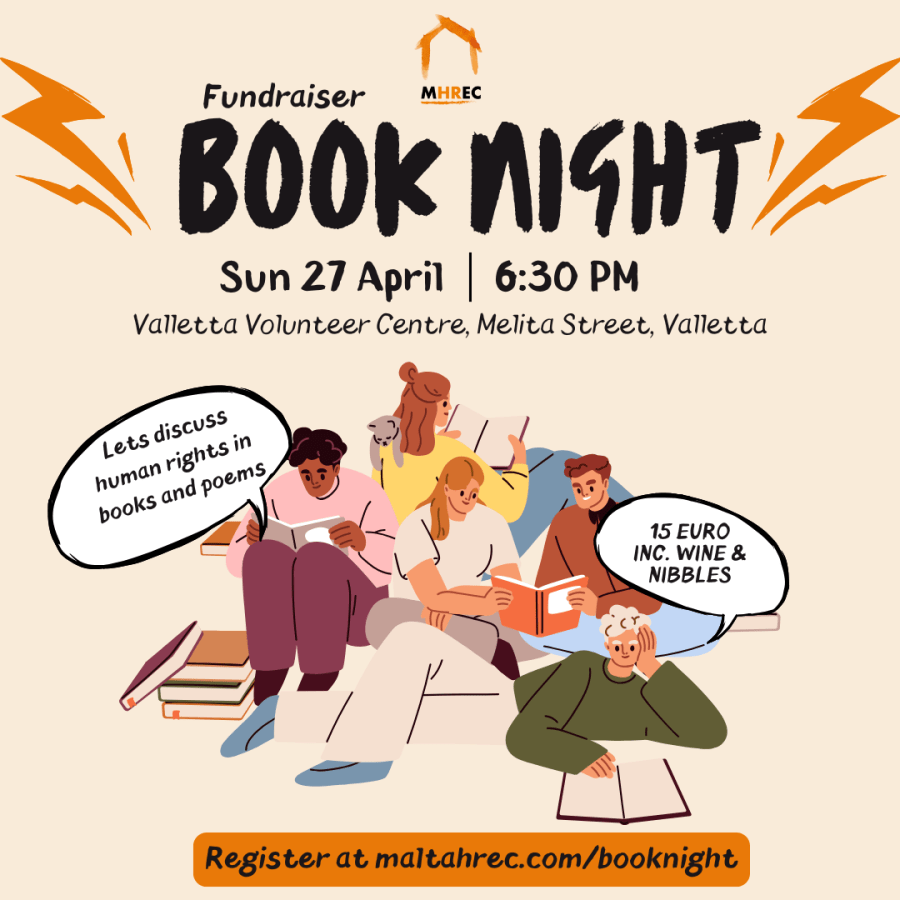
As you may know, MHREC are organising a fundraising book night! On the occasion of World Book Night, MHREC are looking to collaborate two things the organisation absolutely loves; reading and human rights.
Ahead of this exciting event, check out how human rights and books interlink!
Books Change Lives – Malala Yousafzai, a Nobel Prize winner and education activist, was inspired by reading The Alchemist by Paulo Coelho, which strengthened her belief in following her dreams.
Banned Books & Bold Ideas – Some of the most famous books promoting human rights, like To Kill a Mockingbird and 1984, have been banned or challenged in different parts of the world. Why? Because books have the power to make us think and question.
The Universal Declaration of Human Rights & Books – Article 19 states that everyone has the right to freedom of expression, which includes the right to seek, receive, and impart information – basically, the right to read!
Libraries as Lifelines – During World War II, underground libraries operated in concentration camps and war zones, providing people with hope, knowledge, and a sense of normalcy. In today’s refugee camps, book-sharing initiatives help keep education alive.
Language & Rights – The UN estimates that there are around 7,000 languages in use worldwide. Every time we read a book in a different language, we help keep cultural diversity alive!
The First Novel – Reportedly, the first modern novel, The Tale of Genji, was written in Japan over 1,000 years ago by a woman—Murasaki Shikibu—challenging gender roles of the time.
Book Smugglers Exist – In countries with strict censorship, activists have risked their lives to smuggle books and spread banned ideas. Even today, underground book networks help people access information where censorship is high.


 MHREC
MHREC 
You must be logged in to post a comment.